
Category Archives: Sermons

The Awesome Word of God

Click on the Camera to view the full message.

The Bible, the Word of God, is one of the foundational pillars of the church.

The opening verses of John’s Gospel is one of the most profound pieces of scripture and probably the greatest introduction to a book in the Bible. He goes back to Genesis 1 and uses the same language that was in the Torah, “in the Beginning, God…”. And then he uses the term “Word” for Jesus.

He writes that the Word was with God, and then he makes a bold statement, “the Word was God”. In fact, in the Greek, the order of the sentence reads, “and God was the Word”. But the definite article makes the “Word” the subject of the sentence.

If that wasn’t enough, he declares that this God/man is the one who spoke all of creation into existence by the power of his word.

This is Jesus, the creator God, and the revelation of Jesus in the Word of God carries more power than we could possibly imagine. It is not a collection of ancient texts that offer some wisdom.

God has been speaking to His creation from the beginning. Psalm 19 is a picture of God speaking through His creation, His general revelation. God spoke directly to Abraham, Moses, Samuel, and then through the prophets. God ultimately revealed himself through Jesus (see John 14:9).

In verse 4 of John 1 we read, “In him was life, and the life was the light of men.” Life is a key theme in the Gospel of John, the word is used 36 times in the book. One of the essential requirements for life is light.

When Jesus ascended into heaven, he sent the Holy Spirit. The Holy Spirit fills the followers of Jesus and enables them to be the light of the world. The Holy Spirit is the one who reveals truth, gives wisdom and understanding, as we feed on the Word of God.
And then in verse 5 we read, “The light shines in the darkness, and the darkness has not overcome it.” This is the ultimate spoiler, John hints at the beginning of the book, “hey, I want you to know how this ends, the light wins!”

The light always shines, and the church is now the carrier of the light. In the world in which we live, this is not a losing battle, there will always be opposition as long as there is darkness, but light always dispels darkness, it is a law of God’s creation established in Genesis 1:3. The church that has the Bible as its foundation, will always be the light in the darkness.

And there is a promise in this verse, it is not written in the past tense, it is a present aorist continuous sense, simply meaning, “the light has overcome, will overcome and will keep overcoming the darkness.”

We are living in an age of fear with all the information that we are exposed to from the media and entertainment world. Fear controls, fear paralyses. What are you afraid of today?

  • What about the economy and the predicted financial collapse?  “The light shines in the darkness, and the darkness has not overcome it.”

    • What about the LGBTQ agenda for our children and grandchildren? “The light shines in the darkness, and the darkness has not overcome it.”

    • What about the seemingly endless reports of murder and violence in our city? “The light shines in the darkness, and the darkness has not overcome it.”

    • What about the war in Ukraine and Chinese saber rattling, what about a third world war? “The light shines in the darkness, and the darkness has not overcome it.”

    • What about churches closing? It seems that we are losing ground in an increasingly secular world. “The light shines in the darkness, and the darkness has not overcome it.”

The light of the Word of God will never fail. Isaiah 25:3 reads, “You keep him in perfect peace whose mind is stayed on you, because he trusts in you.”

Keep your eyes on the Word of God (Jesus) and keep your eyes in the Word and you will know peace, because the darkness has not overcome it.

The Bible is by far the most printed book in all history, with somewhere between 6 and 9 billion copies printed. The next most printed book is the “Quotations from Chairman Mao Zedong”, with about 900 million copies in print. The Qur’an has approximately 800 million copies printed. In the 21st century, Bibles are being printed at a rate of around 80 million per year.

The Emperor Diocletian (AD 284-316) boasted, “I have completely exterminated the Christian writings from the face of the earth!” The very next emperor, Constantine, became a Christian and ensured that all churches received Bibles immediately. Every dictator who has been controlled by Satan throughout history has sought to eradicate the Bible, yet it stands (see 1 Peter 1:23-24).

The Bible is by far the most published, most read, most sold, most attacked, most offensive, most critiqued, most studied, most ignored, most influential, and most powerful book in all human history. So why do we not consume it every day?

Why do we think we can resist temptation, raise children, be the light, and live as overcoming Christians, by ignoring the reading and memorizing of the Word of God.

The church has the word of God as a foundation and pillar. Any church that removes or contradicts one part of scripture to satisfy a secular worldview, has ceased to exist as the Body of Christ. If the word cannot be trusted, then it cannot be foundational. If the Bible is not our authority, then what authority do we have?

We must remember that Jesus, the Word of God, is the head of the church and the bridegroom of the church.

Are you feeding on the Word? Allowing the Word to shine brightly in the darkness?

Are You Going to the Banquet?

Click on the Camera to View the full message

In Revelation 19 we read about the marriage supper of the Lamb. Jesus the bridegroom will be the focus, and we,  the church, will be the bride. This will be a glorious celebration that includes all the followers of Jesus around the world. People from every nation, tribe, and language. This is the bride of Christ.

However, this banquet requires an invitation.  Are you going to the banquet?

In Revelation 19:6 we read about the sound of a great multitude of angels singing praise to God. A sound unlike any choir we have ever heard; it will make Arrowhead Stadium sound dull in comparison. It is a cry of victory, Babylon is destroyed, our lord God reigns. The heavenly hosts saw all that God has done and they burst into praise.

And then the attention turns to this unusual bride, made up of people from every nation on the earth. How has the bride made herself ready? If you look at the church today, would you say the church globally is ready? The church, this perfect bride will be made up of the followers of Jesus, but it wont look like anything we have seen before.

The direction that God has for the global church is unchartered territory, we have never been this way before. God is constantly refining, transforming, and preparing the church.

What does the bride wear? Verse 8 tells us that the Lamb’s bride is dressed “in the righteous deeds (acts) of the saints.”  We must remember that we are saved by grace through faith in Jesus Christ (Ephesians 2:8-9). The bride goes to heaven by God’s grace, and not by good works. But once in heaven, believers will be judged at Christ’s judgment seat for their faithfulness in life and in service. Christ will reward us according to our faithfulness, and the rewards we receive will make up the “wedding gown.”

Dr. Lehman Strauss writes, “Has it ever occurred to you … that at the marriage of the Bride to the Lamb, each of us will be wearing the wedding garment of our own making?” What a solemn thought!

Jesus tells a parable of the wedding feast in Matthew 22 and speaks about a man who is not dressed in the wedding garments (Matthew 22:11-14). Here is a man who thinks he is in, but he is not. A man who thinks he is part of the bride of Christ, but he is not wearing the garments of the bride. There are no deeds and no fruit in his life.

If we boil it down to the very basics, there are only two kinds of people. Those in the Kingdom and those outside of the Kingdom. And just because we sit in church every week, it does not mean we are part of the Kingdom of Heaven. It is possible to be members of the visible church and not actually part of the Body of Christ. A person is not saved by being a long-time member of any church. You personally must make a decision regarding the Gospel of Jesus Christ in order to become a member of the invisible church, or the true body of Christ.

Sometimes we see so little evidence of people being a part of the bride of Christ. Why there is such a lack of people who are clothing themselves in the righteous deeds of saints? Sadly, there are many people in the church who prefer the stench of grave clothes (Ephesians 2:1). Many people in churches today are barely on life support, you see no evidence of their new life outside of Sunday morning attendance.

Jesus indicated that even in the visible church there would be those who are not true believers, and thus not members of the invisible Church (Matthew 25:31-46).

In verse 9, the angel says, “…Blessed are those who are invited to the marriage supper of the Lamb.” There is a private invitation, are you invited? Have you made Jesus Christ your lord and savior? Are you part of the family? Do you have your invitation to the marriage supper of the lamb?

Before we become Christians, we are blind to the glory of God, we are deaf to the voice of the Holy Spirit in our lives, we have no love for God, we have no sense of a personal relationship with the creator God.

If you don’t have a sense of the presence of God, if you don’t know him as your heavenly father, if you don’t hear the voice of the Holy Spirit guiding your life, you may very well be dead in your spirit.

If you don’t have a personal relationship with Jesus Christ, you may be a registered member of the church, but you are not a member of the invisible church, and you are not going to spend eternity with Jesus Christ, the head of the church (Matthew 7:21).

Ephesians 2:10 says, “For we are his workmanship, created in Christ Jesus for good works, which God prepared beforehand, that we should walk in them.” God saved us, and prepared works for us to do that become the linens that we will wear at the Marriage supper of the lamb.

We don’t work to be saved, but we joyfully serve because we are saved.  

Our motivation for serving the Lord is to bring glory to the name of Jesus, to serve him out of love and gratitude. That earns us the fine linens.

The church is going to the marriage supper of the lamb, will you be attending?

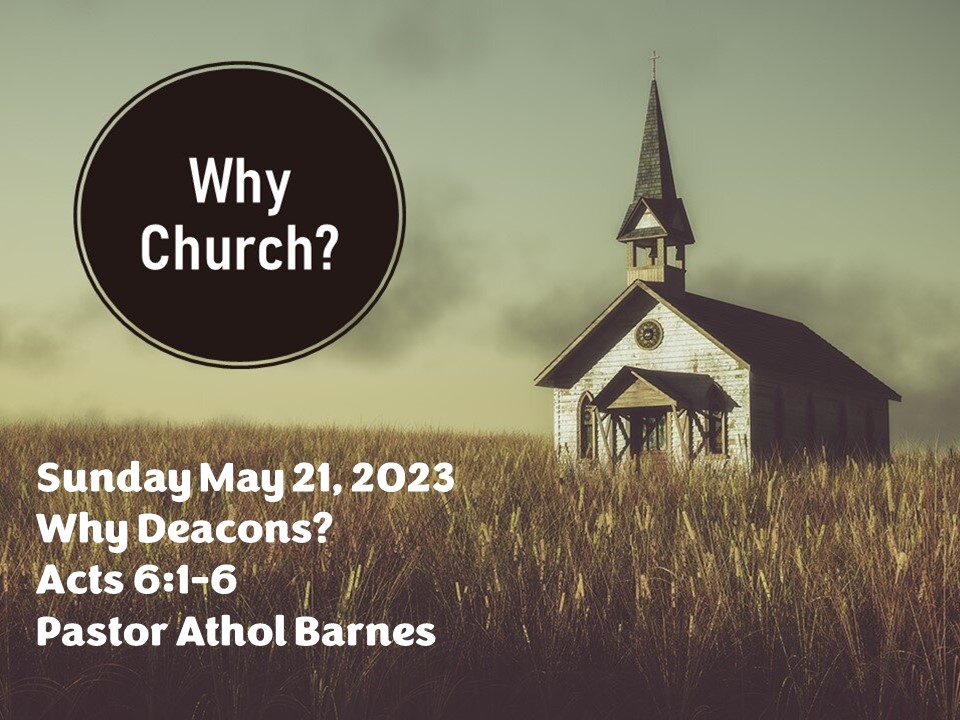
Why Church part 1

Click on the Camera to view the full message.

A little boy said, “Dad, did Grandpa make you go to Sunday school when you were my age?”

His father said, “He sure did. We went every Sunday.”

The boy said sadly, “Well, I bet it won’t do me any good either.”

Is that the purpose of the church? To make us good people?

Is the church a humanitarian organization, or does it exist for a more significant purpose?

The Bible frequently refers to the church as the Body of Christ (Romans 12:5).

Much of the emphasis today is on what the church does in relation to social change and mission rather than on focusing on God and the essence of worship.

In fact, today the church is viewed by many as being dynamic and flexible, changing with the culture and times. However, if we change the church identity to adapt to the world, rather than the church being a change agent in the world, how can we call ourselves a church that is based on the unchanging Gospel of Jesus Christ.

If the church constantly changes to adapt to the world, that church has ceased to worship God, but rather is worshipping a god of their own creation, one who affirms what they affirm and always approves of their lifestyle. That is humanism and idolatry.

The church is called the Body of Christ, and as the Body of Christ, we ought to display the power of God to our community in faith.

In Acts 2, Peter preaches the church’s first evangelistic sermon after the Holy Spirit empowered the 120 who had gathered in the upper room in Jerusalem at Pentecost. The powerful proclamation empowered by the Holy Spirit led to the salvation of 3000 people.

Peter told the people the hard truth about Jesus and their own part in his crucifixion, it was a bold word.

As the church, do we boldly proclaim the truth of God’s word?  Truth as it relates to all the issues the world is dealing with today. The truth is found in God’s word. Are we proclaiming it?

The church was born and in verse 42 we read, “And they devoted themselves to the apostles’ teaching and the fellowship, to the breaking of bread and the prayers.”

Devotions means dedication or commitment to a cause or a purpose. One of the greatest fears in our culture is commitment, devotion means commitment. It means showing up, being present, and being involved.

Sadly, the average person who calls themselves a Christian church goer, attends church less than twice a month.

The church devoted themselves to fellowship and breaking of bread and prayer.

Breaking of bread”, probably refers to their regular meals, but at the close of each meal, they probably paused to remember the Lord by observing what we call “the Lord’s Supper.”

The word “fellowship” is more than simply gathering in the same room and talking. It means “having in common,” and this was a practice of sharing their possessions and material goods with one another. It was not a form of communism; it was voluntary sharing out of love for one another.

That is community, being willing to help and give even when it costs. There is a lot of talk about community and the ideal church being this 1st century church, but we as 21st century people will not be able to come close without some radical changes in our values.

We won’t attain true community because we are selfish and comfortable people who are told from an early age that we are owed possessions, comfort, and respect.

The first church was a selfless community. We want community, but we aren’t willing to be selfless.

This doesn’t mean we cannot have community; it just means that we will always fall short of what the early church experienced due to our culture and our own innate selfishness.

The early church devoted themselves to prayer.

The most powerful thing we can do with our time is prayer, and yet we neglect prayer.

Prayer is talking to God and hearing from Him. It is a conversation with the all-powerful, all-knowing creator of the universe. What an incredible privilege.

Jesus spent a lot of time in prayer, and he prayed out loud in front of his disciples. If the most powerful being in the universe prayed for himself, what makes us think we can get by without prayer?

Prayer is not about using eloquent language; it is about simple, childlike faith in coming to our Heavenly Father.

The church that was devoted to teaching the Word, fellowship, breaking bread, and prayer had powerful fruit. Verse 43 says, And awecame upon every soul, and many wonders and signs were being done through the apostles.”

That word “awe” is the fear of the Lord. Fear of the Lord is morality, that is governed by reverence, respect and honor for God. We see an epidemic of moral failures in the church, because we have no awe, no fear of the Lord.

Why? Because there is no selfless and transparent commitment to fellowship, teaching and prayer. No true church.

This church was vibrant, effective, and powerful. Verse 43 says that they witnessed signs and wonders.

We should come together weekly with an expectation of the supernatural God doing supernatural things in our midst.

The results of this supernatural church community is spelt out in verse 47, “…And the Lord added to their number day by day those who were being saved.”

The entire world was turned upside down (Acts 17:6).

So why church? Our world needs the church. Our world needs a church that is vibrant, that is devoted to the Word of God, fellowship, and prayer.

The primary means by which the early church “turned the world upside down” was the authentic faith of those who followed Jesus. Displaying the power and love of the Lord Jesus Christ.

What would our world look like if the modern-day church devoted themselves to the Word, fellowship and prayer?

Mistaken Identity

Click on the camera to view the full message.

Palm Sunday is the day we remember Jesus entering Jerusalem riding on a donkey and being hailed as king. For the Jews it was a great day. Their King had come, and they expected that he was going to finally free them from the Roman empire.

But they were suffering from a case of mistaken identity, they didn’t realize who Jesus was. Who could blame them, we all have blind spots based on our education, culture and expectations.

It was a great day for the disciples of Jesus, they must have thought that it was the greatest day, this was their graduation day. How they missed it, and how the world missed it. It was a case of mistaken identity.

The most famous person in all of history never sought the limelight or the praise of men. But not this day, Jesus received the praises due to him, the people were singing and exalting him as lord.

Jesus rode towards Jerusalem on a colt that had never been ridden. The fact that the colt had never been ridden and yet submitted to Jesus demonstrates his sovereignty over his creation.

In times of war a conquering king would ride on a chariot or a stallion, but Jesus rode on a colt to declare that he is a king proclaiming peace.

This was Passover week and Jerusalem had other dignitaries arriving and staying there. Pontius Pilate, the Roman Governor, and Herod Antipas, the Tetrarch or King of the region of Galilee had arrived in town.

Jesus was surrounded by a crowd of people praising him (Luke 19:38). Probably in the crowd were Mary, Martha and Lazarus, and maybe even Zacchaeus. Many others whom Jesus had touched and whose lives were never the same.

Herod and Pilate did not take Jesus seriously, otherwise they would have sent a garrison of troops to prevent him from entering into the city.

The fact that the people were waving palm branches showed that they didn’t grasp who Jesus was, and why he was coming to Jerusalem. By waving palm branches they were showing that they expected Jesus to be another warlord, another general of the armies and one who would lead them to overthrow the Romans (see the Maccabean revolt in 160BC). They were saying that they were ready to pick up their swords & shields & go to war if He would lead them!

But then the mood shifts and something dramatic takes place. Jesus abruptly stops and begins to cry out loud. The Greek word used here indicates that Jesus burst into tears; this was not a silent control of emotion. It must have been awkward; I am sure Jesus’ disciples began trying to figure out how to save the day and get the celebration going again. Why was Jesus crying?

As Jesus looked at Jerusalem and he saw the eager faces of those around him, he was overcome by the awareness of their emptiness. They were empty because they had not heard the truth of his message; they did not understand the true purpose of his coming to earth. They had eyes, but they did not see, and ears but they did not hear. They were blinded by tradition and expectation. It was a case of Mistaken Identity

As Jesus looked around, he saw a lot of dead religious activity that was not accomplishing anything. The temple had become a den of thieves, and the city was full of people celebrating Passover with little understanding of its true meaning, or that it pointed to his own impending crucifixion.

Jesus looked at the City of David that was shortly about to come under attack and judgment. Jesus knew that in 40 years’ time the city would be under siege by the Romans for 143 days (Luke 19:43-44). The ancient historian Josephus estimated that between 600 thousand and 1.1 million Jews died in this Roman siege.

And all this because the people did not recognize the time of Jesus’ coming. It grieved Jesus because of his great love for the lost, the people he came to save (John 1:11).  

Are we guilty of not seeing Jesus for who he really is? What does Jesus see as he looks at our hearts? Is he grieved because we are going about the motions of church?

Is he grieved because we are so weighed down by the weight of the problems of the world that we have no time for a relationship with him? Does He see people who are so busy doing things, so busy that they never bother to consider those things that are eternally important?

As Jesus looks at us, does he weep, because of the lost opportunities for a deeper relationship with him.

Jesus calls out to us today just the same way as he did over the city of Jerusalem, “If you, even you, had only known on this day what would bring you peace.” Luke 19:42.

If only you would see and acknowledge the true risen Lord, and stop living a life of performance and dead religion. If only you would stop trying to be good enough for God. You cannot be good enough. You don’t need to be perfect either.  Jesus died so that you are forgiven, there is nothing you can do to earn the grace of God.

Do you just follow Jesus because of what you can get from him? Or do you truly have a relationship with the King of Kings, and it brings you peace that is beyond understanding.

Do you follow Jesus because it is your tradition? Do you follow Jesus because that is what you have always been taught to do?

Identify Jesus today.

The Greatest News Ever

Click on the camera to view the full message

We all like good news, don’t we. If we really grasp this news, it will change the way we respond to God.

We know that the Gospel is the Good news, that God became a man and died on a cross for our sins, and that God raised Jesus from the dead so that we could be reconciled with God if we put our faith in Jesus.

Easter weekend is at the core of the Gospel. In spite of this good news, many of us still struggle with completely trusting God.  

Romans 8 verses 31 to 39 has five profound promises that are really good news. If we grab a hold of these promises, we will have no problem trusting God for whatever He allows in our lives.  

Here are the five promises:

1: God is for us (Romans 8:31)

Our Heavenly Father is not distant or disconnected from us. The expense that God paid for our salvation is beyond what we can imagine. The cross is an outpouring of perfect, divine love (Romans 5:8).

If God displayed His love for us in such a way while we were sinners and separated from Him, now that we are reconciled to Him, how much more will he give us all we need (1 Peter 2:9).

2: God graciously gives us all things (Romans 8:32).  

God our Heavenly Father gave His son for us so that we could be in right standing before God.

As a result of our standing before God, He blesses us. He blesses us with the basic things we need and then even the things we don’t need. God loves to bless His children.

It is a good daily exercise to look for those lavish gifts from the Father, the unexplainable special events or things that are simply gifts from heaven.

The more you see those gifts, the more you will understand His nearness and the truth that the eye of your Heavenly Father is really on you!

3: No condemnation (Romans 8:34).

This incredible chapter begins and ends with a promise we all need to hear regularly (see Romans 8:1).

Who can possibly condemn us? Verse 33 says that it is God who justifies, He has declared us righteous in Christ. Satan is the accuser, but his accusations fall on deaf ears, for we are God’s chosen and beloved ones. Jesus has already paid the price for our salvation. There is no condemnation.

Does this mean that we can sin as much as we like?

Absolutely not, Paul addresses this in chapter 6:2, “By no means! We are those who have died to sin; how can we live in it any longer?”

When we sin, we are convicted and we repent quickly, bringing it to the cross (see 1 John 1:9). Our sins are forgiven, there is no condemnation. Sometimes, our emotions have to catch up with reality.

4: Jesus is interceding for us (Romans 8:34b).

Because Jesus is at the right hand of the Father, he is talking to God the Father about you. More than talking, he is your advocate and perfect high priest.

But not only is Jesus our High priest and advocate interceding for us, we also have the Holy Spirit interceding for us (see Romans 8:27 and Hebrews 7:25). This intercession in heaven assures us that we are secure.

5: You are loved (Romans 8:35-39).

God loves us with an irresistible and unconquerable love. Do you know how much you are loved?

The reality of life is that there is hardship, sickness and pain. It is a lie of the prosperity Gospel teaching that our lives are supposed to be free from sickness, pain, and hardship. But God uses the pain and difficult circumstances for our good (Romans 8:28).

God does not shelter us from the difficulties of life because we need them for our spiritual growth. God assures us that the difficulties of this life are working for us and not against us. God permits trials to come that He might use them for our good and His glory.

When going through trials, it is tempting to feel that God has deserted us. But that is when He is nearest, just like a parent who picks up a child who has fallen and hurt himself.

Our Heavenly Father is nearest when we feel the most unworthy, because of His great love for us. Paul goes on to write that we have absolutely nothing to fear (Romans 8:39). This is not a conditional promise of God, rather it is based on the victory that Jesus won on the cross. His victory becomes our victory.

This security in Christ is an established fact, and we claim it for ourselves because we are in Christ. Nothing can separate you from His love. If God be for us, who can be against us!

To live in this knowledge is freedom, but it requires faith to believe these incredible promises.

Too often we walk by feelings. Our feelings and emotions dictate our perceived reality, but by walking in faith and believing that God loves you with an all-encompassing love, changes the way we live. It changes the way we respond to challenges in life. We no longer have to walk in fear, but rather we can walk in perfect love (See 1 John 4:18).

Warren Wiersbe wrote, “The more we love God, the more we understand the love of God. And the more we understand His love, the easier it is to trust Him. After all, when you know someone intimately and love him sincerely, you have no problem putting your confidence in him.”

What if God asks for it all?

Click on the camera to view the full sermon video

What would you do if God asked you to give it all up?

When God tested Abraham in Genesis 22, He gave us the clearest prophetic picture of what Jesus would have to endure on the cross.

At this point in his life, Abraham was a seasoned man of faith. He had accomplished much and given much to the Lord. In Genesis 12, he obeyed God and left his fathers household to move to an unknown land, going in faith and giving his all to God.

God blessed Abraham and made a special covenant with him in Genesis 15, but Abraham didn’t have any children?

Where it was impossible in the natural, God blessed Abraham and Sarah with Isaac, the son of the promise.

All seemed to be going well, God has blessed, Abraham has been faithful and now surely, he would rest in his old age. But God has one more test for Abraham as we read in Genesis 22:1-19.

This account is traditionally viewed in light of Abraham’s tremendous faith in response to the unthinkable request from God to sacrifice his only beloved son, the child of the promise.

At first glance, we gloss over those words, probably because we may have heard them many times. But this is a horrifying story. God asks Abraham to slaughter his own son, this is counter to everything we know about God. This is offensive and challenges our sense of decency and our understanding of God. But this is recorded as Abraham’s finest hour, his most glorious victory in a life filled with challenges.

We have the advantage of knowing how the story will unfold, but for Abraham it must have been the most difficult few days of his life. Maybe he suspected this was a test, but we cannot know for sure.

In Genesis 22:4 we read, “On the third day Abraham lifted up his eyes and saw the place from afar.” It appears that he had been walking for three days with his eyes on the ground before him, deep in thought and anguish. Abraham’s quick response and silence seems to indicate resigned numbness to God’s will, steeling himself against the emotions tearing through his heart.

God stopped the sacrifice of Isaac right at the point where there was no doubt that Abraham was going to go through with the act of killing his son. God showed that He never intended to allow Abraham to kill Isaac and went on to explain the test to him.

This picture of God is not the soft and benevolent Heavenly Father that our modern-day Christianity likes to portray. On the contrary, the picture of Abraham lowering the knife was, in God’s eyes, the passing grade of the test. We must come to grips with the fact that the God of the Old Testament is still the same today, He has not changed. But what has changed is our relationship with Him through Jesus Christ (see Isaiah 55:8).

Isaac was not a young child at this point, and he was fully aware of what took place. It must have been incredibly traumatic for him; his own father betrayed him and was about to kill him.

But according to a few ancient Jewish rabbinical documents, it is said that Isaac was so convinced that he needed to be sacrificed, that he asked to be bound tightly. Which is why the Hebrew speakers refer to this account as the “Akedah” or “binding”.  

This gives us a totally different picture of Isaac, one of a willing sacrifice. Isaac is a “type” or foreshadow of Jesus.

Leading up to Mt Moriah, Abraham is silent. So too, God the Father is silent in Gethsemane at the leading up to the crucifixion of His beloved Son.

The fact that the wood for the offering was laid on the back of Isaac is a symbol of the cross that Jesus would one day carry on his shoulders.

Leading up to his crucifixion, Jesus was unwavering in his path to the cross and he was silent during his trial.  In the same way, Isaac walked alongside his father and scripture seems to suggest that they were not engaged in much conversation.

This account in essence is the salvation of Israel.  Jesus was sacrificed to save people from all nations.

The crucifixion was a test.  A test that Jesus passed to save all who would put their faith in him.

So many parallels, however, on every level, Jesus is the greater one who accomplished much more by his own personal sacrifice.

What makes this account so horrifying, is that Abraham stood poised with a knife to slaughter his own son, the son of the promise. As we think about the crucifixion of Jesus, we should be even more offended. Because of our sins, God the Father required a perfect sacrifice. The only way we could be saved was by the perfect sacrifice of the spotless lamb of God, Jesus (See Isaiah 53:6 and 2 Corinthians 5:21).

We must never miss the horror of the cross, where God the Father inflicted His perfect wrath upon God the son. That is the offense of the cross that is impossible for us to fully comprehend.

This picture on Mount Moriah became reality on Mount Calvary.

As we begin to focus on Calvary in this season, let us never forget the unimaginable price that was paid for our salvation.

What would you do if God asked you to give it all up? Do I trust God enough to be obedient when he invites me to put something on the altar. Do I worship Him above all else, putting His will and plans above my own. As you walk with God, there are going to be times when God asks you to give it all to Him (Matthew 16:24-25).

There will be things, even good things, plans and dreams, that we need to be willing to sacrifice before God is able to use us as He intends.

Are you willing to give it all to him today?

Khayelitsha, South Africa – Report Back

Click on the Camera to view the full message video

Last December, I was invited to join a ministry called Team Xtreme International, on an outreach to South Africa. I prayed about it and felt the Lord leading me to go. Little did I know how significant it would be.

We were primarily proclaiming the Gospel in a city of 2.4 million people called Khayelitsha, which is on the outskirts of Cape Town. It is an area that has suffered from unimaginably high unemployment rates and crime. The name Khayelitsha means, “New Home” in Xhosa and was established about 40 years ago during the height of Apartheid.

Many people warned us not to go into Khayelitsha and even locals told us to leave because they were afraid for our safety. But the Lord had His angels protecting us every day.

We spent most mornings touring schools and ministering during their assemblies. We also did after school programs and evening ministry from a truck bed stage.

The school assemblies were the most effective ministry. As we shared the Gospel, 90% of children responded. We were able to spend time praying with students and pointing them to freedom in Christ. It is hard to put into words the amount of pain that these children experience, including sexual abuse, violence, absent parents and rampant drug use.

For me this outreach was probably the most impactful of my life. I wrestled with feelings of shame and guilt from the years of apartheid and feeling that I did not have a right to speak in my own country.

The words of Jesus about a prophet not being welcomed in his own hometown rang in my ears (Matthew 13:57). But the Lord redeemed that and set me free as a wife of one of the pastors we served with, welcomed me, and released me of the burden of guilt. She reminded me that it has been thirty years and that I should stop carrying an unnecessary burden. After that I felt tremendous freedom to declare the hope of the Gospel to the people of Khayelitsha.

In the course of the 18 days of ministry and working with other organizations, over 23,000 people heard the Gospel and almost 18,000 responded to the message. In addition to the proclamation, partner churches were connected, and many discipleship groups are already under way. God moved powerfully and we saw many miraculous healings and powerful conversion encounters.

One school was even shut down for the day after the time of ministry because all the students were so impacted that they couldn’t get back to their work.

But what about us? These are amazing stories, but we need the power of the Gospel in our schools and streets in America.

In Matthew 10, Jesus called his twelve disciples and then sends them out on a mission trip. He throws them into the deep end and warns them that they will experience persecution as they go out and proclaim the kingdom.

Jesus sent his disciples out as his witnesses, witnesses of himself. They were the forerunners in missions, going and telling others about Jesus and the Kingdom of Heaven.

We know from the Great Commission in Matthew 28, that Jesus sent all his followers to go and be his witnesses, ambassadors.

The disciples were ordinary men, tradesmen, humble and broken, but Jesus gave them authority and sent them out.

The Bible doesn’t tell us how long they went for, it was probably a short-term campaign. In Luke 9 verse 10 we read that they returned and reported back to Jesus all that had happened.

Now it is true, that the message they carried and the message that we have today is different. Jesus hadn’t gone to the cross or risen from the dead. The victory and the power of the cross hadn’t been accomplished yet.

We have a different and far more glorious message; our message is far more powerful.

In one of the school assemblies I noticed the kids not paying attention, so I said to them, “what I am about to tell you is the most important thing you will ever hear in your life.”  That got their attention.  Do you believe that? It will be reflected in how much we are willing to be obedient to the Great Commission.

If you read Matthew 10 carefully it is clear that Jesus is speaking to his disciples, but he is also speaking to all future ambassadors for the Gospel. He is speaking to us and to future generations of believers.

In fact, the language Jesus is using seems to parallel what he says later, on the mount of olives in Matthew 24 about the coming persecution before his return. In our current age, the emphasis on “fear not” in verse 26 onwards is particularly helpful.

We are surrounded by people telling us what we can and cannot say in the public square.

The principle of one of the schools we visited had put Bible verses all around the school on the pillars and notice boards – I asked her, if she would get into trouble with the administrators, she said, “probably, but our school needs Jesus”.

Yesterday in our men’s breakfast, we heard several examples of some of our men who boldly stood up for the truth of God’s word in spite of threats. And God was powerful to deliver.

You see, we are all missionaries; some get on a plane, others go to the office or workshop. A missionary is someone sent by the Spirit of God to a particular place, to be an ambassador for Christ. Where you are is your mission field.

Jesus ends his challenge to his disciples in Matthew 10:32-33,  “Whoever acknowledges me before others, I will also acknowledge before my Father in heaven. But whoever disowns me before others, I will disown before my Father in heaven.”

Being a Christian is not like being a secret agent in the CIA, it is public, we are called to be bold witnesses (see Romans 10:14).

How are you doing in being an ambassador for Christ?

The Purpose of Marriage

Click on the camera to view the full message video

Marriage is under attack. I believe, that one of the reasons why we see marriage under attack in the world today is because the church has an incomplete view of marriage.

In 2015, the Supreme court ruled that people of the same sex could legally marry. But this man-made law simply determined that two people can legally obtain the benefits that society provides for married couples. It doesn’t change what God says about marriage. Do we trust the designer? The only way that we can embrace same-sex marriage is to devalue marriage all together.

People will argue that Jesus didn’t specifically speak out against homosexuality. But he was pretty clear about marriage (Matthew 19:4-6). The church must celebrate and teach a Biblical understanding of marriage. It’s sad that in the 21st century, we have to define marriage.

This is more than cultural wars, this is spiritual war, Satan hates marriage and has a specific purpose to destroying marriage.

John Stott wrote: “Marriage is an exclusive heterosexual covenant between one man and one woman, ordained and sealed by God preceded by the leaving of parents, consummated in sexual union, issuing in a permanent mutually supportive partnership, and normally crowned with the gift of children”

Sexual immorality is any sexual activity outside of this biblically defined covenant of marriage. Within the Biblical bond of marriage, sex is blessed, while outside, it is sexual immorality (1 Corinthians 7).  

The reason marriage is so sacred is because the primary role of marriage is to portray and proclaim the Gospel (Ephesians 5:32). Satan hates marriage, because it is a picture of two non-interchangeable and different parties, made one by the work of Christ. Husbands portray Christ, and wives represent the church. Both parties have definite roles and functions, the church cannot do what Jesus is doing. And that is why Satan created a counterfeit, a lie that mocks God’s design.

God takes marriage very seriously, and has defined immorality for what it is, regardless of how cleverly the courts, and the entertainment, and media machines have redefined it (Hebrews 13:4).

In Ephesians 5:22-24 Paul focuses on wives. Many people struggle with the language of submission, but this is not about a form of subjection or controlling power. Submission simply means to prefer others. And it is only possible as one is filled with the Spirit of God.

Andreas Kostenberger wrote, “While some may view submitting to one’s husband’s authority as something negative, a more accurate way of looking at marital roles is to understand that wives are called to follow their husband’s loving leadership.”

Husbands and wives have equal value, but different roles within marriage.

The husband’s primary role is to be a priest, being the spiritual leader in the home. Tragically, men have abdicated their authority in this area by giving in to laziness, leisure, pornography, and a general lack of spiritual discipline.

The women’s role is to follow and support the husband in the spiritual leadership of the family, ensuring that the home is a place that is sacred and holy to the Lord.

When both are fulfilling their roles, marriage is a beautiful thing to observe.

We must be careful to reject any teaching that says that women are subservient to men, or that the husband is a form of a CEO in the marriage. Submission must be voluntary and follows sacrificial love.

Typical human nature is that women crave love and men desire respect, that’s the way God has wired us.

So, we have the two aspects of marriage: love and submission.

Love and submission can both be defined as putting the will of the other person ahead of your own, to prefer the other person. Love and submission are two sides of the same coin.

In verse 25 Paul tells husbands, “Husbands, love your wives, as Christ loved the church and gave himself up for her.”

What is Christlike love? It is the love that took Jesus to the cross to give his own life for the church. It is sacrificial love.

For men marriage is a call to die to self. It is daily giving yourself away for the good of your bride. It is sacrificial and preferential love. You cannot love your wife like Christ loved the church and be passive. This is loving by serving and giving of your time and energy.

It is also a sanctifying love, as we see in verse 26, “that he might sanctify her, having cleansed her by the washing of water with the word”

This does not mean that any husband has the ability to atone for sins, only Jesus can do that. But men are to be the spiritual leader in the home. Encouraging their family to read the Word and allowing the word of God to bring transformation.

Here is a good question for men. Are our wives more like Christ because she’s married to us? Or is she more like Christ in spite of us?

But there is an eternal purpose in marriage. In verse 32, Paul writes that the mystery of marriage refers to Christ and the church. It is beyond our understanding. When God created the world, and the covenant of marriage, he had Christ and the church in mind. Not the other way around.

Marriage is not the ultimate, Christ is.

Christ is ultimate, not our husbands or our wives. Our primary loyalty must be to Jesus.

If I was to ask you, what is the biggest problem that marriages struggle with today, I would get a multitude of answers. But the root problem of every marriage is sin.

Marriage is ordained by God for the glory of God. Therefore, He is the source of the love and the only one who can cause a marriage to flourish and proclaim the Gospel of Christ to the world.

As we shine the light of healthy marriage, the world will see a picture of Christ and the church (John 1:5).

Talking about Sexual Immorality

To view the full message, click on the camera

When we talk about sexual immorality, it really boils down to do we believe that God is the designer and creator of all things. And as the designer, He designed our bodies perfectly. And then He gave us a manual, His word, to give us non-negotiables for how we are to function to avoid unnecessary pain.

As the world becomes more and more immoral, we see pain increasing. Marriages are breaking down and children are hurting. Pornography is affecting all spheres of society. The LGBTQ lifestyle is causing a dramatic increase in depression and suicide. Young children’s bodies are being mutilated in order to appease a lie – an identity that is not from the Designer.

The world is seeing the effects of a fatherless generation due to promiscuity and selfishness.

That is just some of the effects of not believing the designer and his manual.

The most common Greek word translated as “sexual immorality” is porneia (πορνεία). And it means, fornication, whoredom, adultery, and Idolatry. It means to surrender sexual purity.

Porneia defines any sexual activity outside of the boundaries of a biblical marriage.

Those claiming to be Christians who persist in immorality, cannot come into the presence of God (Psalm 24:3-4). We cannot possibly maintain a healthy intimacy with God when we are giving our souls, minds, and bodies to immorality.

In John 8 we read an account of Jesus teaching in the temple courts when the Pharisees barge in and interrupt the meeting by bringing a woman, that they had “caught” in adultery, right in front of Jesus for all to see. It is an obvious set-up, and they want to catch Jesus speaking contrary to the Law of Moses.

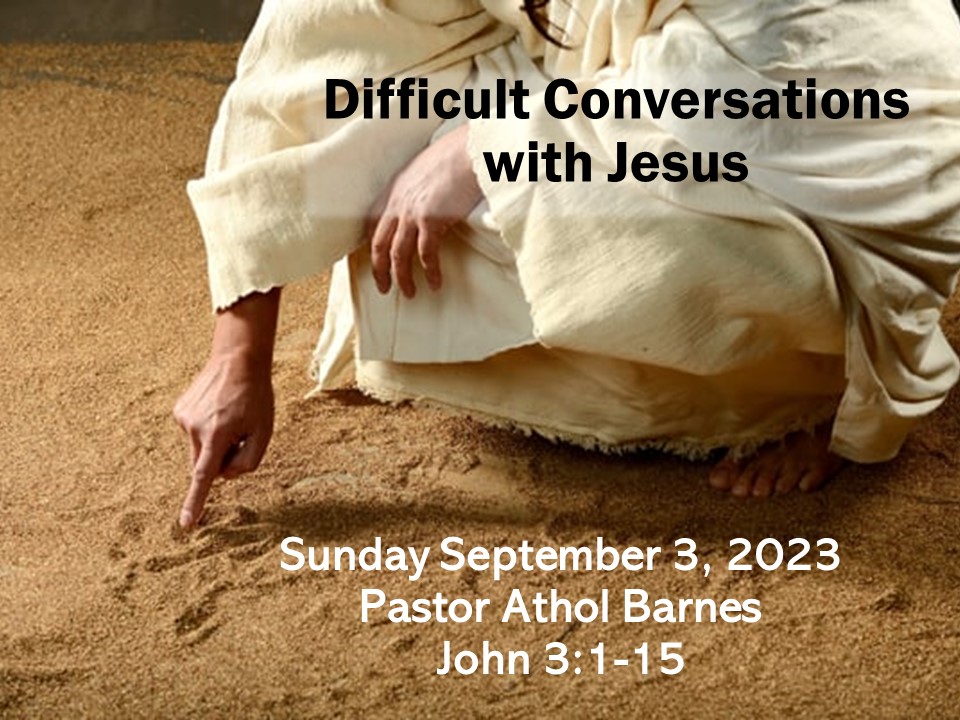
Jesus doesn’t respond to them; he simply begins writing in the dirt on the ground.

They keep pressing Jesus, wanting an answer to spring the trap, and then he finally stands up, the tension in the room rises and he says, “Let any one of you who is without sin be the first to throw a stone at her.” John 8:7b.And then he simply stooped down and began writing on the ground again. As the tension grew, their consciences began to be provoked and the older, perhaps wiser or more guilty men, began walking away.

Jesus was left with the woman and asks her, “where are your accusers?” To which she responds in verse 11, “No one, sir,” she said. “Then neither do I condemn you,” Jesus declared. “Go now and leave your life of sin.”

Jesus sets her free, relieving her of any condemnation and giving her lifegiving counsel, “leave your life of sin”. She leaves in freedom.

Notice the irony of the story.  The accusers leave one by one, convicted of their sin, but not realizing that the only one who could forgive them of their sins was standing right in front of them. The accusers left, still in bondage. But the woman who was the accused, walked away free.

When it comes to sexual immorality, we are all guilty. This is because sexual immorality, like all sins, begins in the mind, in the thought life (Matthew 5:27-28). Jesus raises the bar on the perfect design he created for sexual intimacy between a husband and a wife.

We know that the one who casts doubt on the perfect design of God, is also the one who’s only agenda is to steal, kill and destroy (John 10:10).

Look at the fruit.

A high percentage of pre-marital sex results in abortion.

Homosexual activity cannot produce life, but rather a staggering escalation in depression and suicide.

People addicted to pornography isolate, and retreat from community, and slowly die from the inside.

Sexual immorality destroys lives, families, and generations.

The problem that we face in the 21st century is that we are so desensitized to immorality that we tolerate sinful behavior, and even embrace it as a bad habit or a minor struggle.

Paul writing about unrepentant sinners, who are practicing sinful lifestyles, their sin will lead to eternal separation from God 1 Corinthians 6:9-10.

So how do we respond as the church, believing what God’s word says regarding sin.

There is a very dangerous message that is being taught in churches and by evangelists all around the world, “God loves you just as you are…”

And when people hear that, they hear that there are no conditions to being a Christian, “I can continue to live in rebellion towards God, I don’t have to leave my sinful lifestyle. I don’t have to repent of my sin, I must just accept Jesus into my life.”

The Bible is clear that God hates the unrepentant sinner who has chosen a lifestyle of rejection of God and His Word (Psalm 5:4-5, Proverbs 6:16-19, James 4:4).

 R.C. Sproul said, “God doesn’t send the sin to hell, he sends the sinner to hell.

It is extremely dangerous to neglect repentance in our presentation of the Gospel. We simply don’t have a right view of the holiness of God.

True joy and peace are only found in Jesus, as we follow him in walking in purity. God desires purity and holiness from us, not for His benefit, but because it is for our good. Sadly, as the church, frequently we are the scribes and the pharisees, pointing fingers at other people’s sin, while at the same time being enslaved to private sins.

Today, you can walk in freedom. Don’t continue to live a lifestyle that leads to death.

Do you trust the designer? Do you trust His operations manual?

A Case for Suffering

Click on the camera to view the full message

Everybody who has ever lived has experienced some kind of suffering.

The Bible speaks a great deal about suffering. In James 1, the half-brother of Jesus is writing to the tribes of Israel who have been dispersed from the promised land because of persecution. He was writing to a suffering people.

One would think he would be commiserating with them and consoling them, but rather he says, “consider it pure joy”. In our culture this seems insincere and even uncaring. However, James knows something that we so easily forget, life is temporal.

As children of God, those who have submitted to the Lordship of Jesus over our lives, we also submit to the refining and the testing of God in our lives.

James 1:4 is a wonderful promise, “Let perseverance finish its work so that you may be mature and complete, not lacking anything.”

God is not satisfied with baby Christians. He wants so much more for us. God wants us to grow in faith, spiritual maturity, and in our relationship with him. The maturity described in James 1:4, comes through trials and testing.

You might be amid the fire right now, crying out to God for relief for the suffering you are going through. The Bible encourages us to persevere and not to give up (James 1:12).  

Suffering exists in the world because sin exists. When Adam and Eve sinned, death and suffering became the common human condition. The introduction of sin into creation, gave Satan a limited rule as the god of this age.

There are various sources of suffering.

  • Our own poor choices cause suffering. Making choices that are detrimental to our health and wellbeing. This includes alcohol, drug abuse, and reckless behavior.
  • We also suffer because of fallen human nature. People are sinful by nature and do things that hurt others.
  • Many times, suffering is as a result of Satan and his demons (John 10:10 and Job 2:4-6). Sometimes we give the enemy a foothold by the choices we make. Living with sinful behaviors, we experience the suffering that Satan inflicts, simply because we have stepped out of the covering of God over our lives.

If you are experiencing suffering today because of sinful choices, repent, get back to your first love and put on the full armor of God as we read in Ephesians 6.

  • Sometimes God causes suffering, ultimately, He is sovereign. God is not mocked and when people persist in sin, God causes suffering as judgement. God does not inflict suffering out of sadistic pleasure, but out of a desire to draw people to Himself. When people refuse to repent, the suffering serves as part of the due penalty for sin (Romans 6:23).  
  • Then we have the suffering that God uses to train, refine, and test His children. In Hebrews 12, the author encourages us to submit to discipline for our good (Hebrews 12:7 and 11).

Whether God intentionally causes suffering or allows it in our lives, He uses it for our good.

As we grow in faith and confidence in the goodness of God, no matter how hard the journey, when we see our Heavenly Father face to face, our eyes will be opened and we will be eternally grateful (2 Corinthians 4:16–18).

Sometimes the suffering seems too much to bear, and we wonder why God allows a person to suffer so much pain through no apparent fault of his or her own. In time like this, it is okay to cry out to God and be real with our emotions. This is developing our relationship with God, the tension of growing and trusting.

Sometimes, it takes suffering to enlarge our view of God.

The apostle Paul knew about suffering. In 2 Corinthians 12 we read that to keep him from being conceited, God gave him a thorn in the flesh, a messenger of Satan to harass him.

Paul pleaded with God for it to be removed. We have no details about his suffering but God responded to his plea in 2 Corinthians 12:9, “But he said to me, “My grace is sufficient for you, for my power is made perfect in weakness.” And Paul goes on…” Therefore I will boast all the more gladly of my weaknesses, so that the power of Christ may rest upon me. 10 For the sake of Christ, then, I am content with weaknesses, insults, hardships, persecutions, and calamities. For when I am weak, then I am strong.”

It is a good thing we don’t know what his “thorn” was, because no matter what our sufferings may be, we are able to apply the lessons Paul learned and gain encouragement.

We may not know what the “thorn in the flesh” was, but we must never forget that God allowed it. God is in control and allowing your thorn in the flesh for His purposes and His glory.

CS Lewis writes, “we can ignore even pleasure, but pain insists on being attended to. God whispers to us in our pleasures, speaks in our conscience, but shouts in our pains: it is His megaphone to rouse a deaf world.”

God used Paul’s thorn in the flesh to focus his attention on Christ.

If God has allowed you to suffer, some kind of painful emotional, physical or spiritual struggle, pray that God uses this to draw you into a place of greater dependence on Him. And ultimately towards being mature and complete, not lacking anything (James 1:4).